
The whole story of crystal : 4,000 Years traced through the 7 eras that shaped this iconic material
After Bohemian crystal and Murano glass, it’s time to explore crystal itself.
One invented by an Englishman.
Shaped by Bohemian artisans.
And elevated by French.
A word that, over the centuries, has referred to very different materials with varying compositions. Yet one thing has remained unchanged : its status as a symbol of prestige.
Here is the 4,000-year history of crystal, told in 7 eras…
Before We Begin :
This article focuses exclusively on the origins, history, and current state of crystal. To learn more about its technical aspects (composition, manufacturing, and cleaning), please refer to our dedicated articles :
→ https://cristalartdeco.com/difference-verre-cristal/
→ https://cristalartdeco.com/composition-du-cristal/
→ https://cristalartdeco.com/fabrication-du-cristal/
→ https://cristalartdeco.com/nettoyage-du-cristal/
Table of content
1rst era : Antiquity, when "crystal" was a stone
Before getting into the heart of the matter, we’d like to clarify one point :
Although we strongly emphasize the importance of distinguishing between “crystal” and “rock crystal,” the two are connected in a way that’s worth mentioning here.
In fact, they share the same etymological origin. The word “crystal” comes from the Greek “krustallos,” which originally meant ice. Over time, it came to refer to rock crystal (probably because of their resemblance)… and eventually to crystals (minerals) in general.
As a result, until the Renaissance, an object described as being “made of crystal” referred exclusively to something carved from rock crystal (like the bowl pictured below), a luxury material at the time.
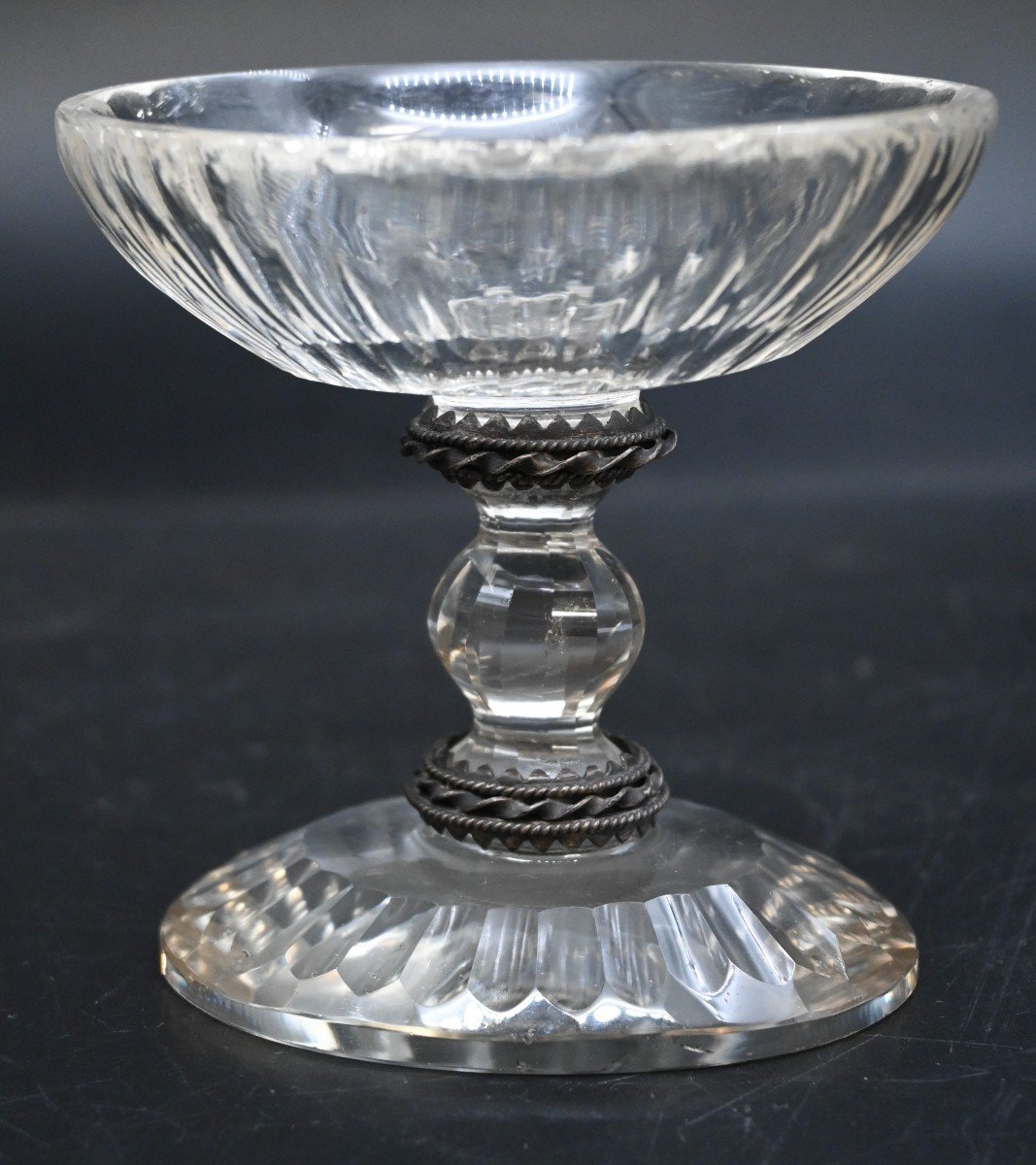
Cut rock crystal is therefore both the symbolic AND etymological ancestor of the crystal we know today. And even back then, it was considered the ultimate luxury.
Yet despite these connections, the transition from rock crystal → the crystal we know today, didn’t happen overnight. Because first came the rise of glass…
Second Era : From Antiquity to the 1st Century B.C., the transition to glass
1 : Mesopotamian origins, the starting point of worldwide glassmaking history
Dating the exact origins of materials as ancient as glass is always difficult, especially when every expert fiercely defends their own theory.
But according to a report by the Corning Museum of Glass, glass was first discovered in Mesopotamia over 4,000 years ago.
A discovery that subsequently led to the creation of the first enclosed glass vessels and the earliest documented glassmaking recipes.
Yet it would take another 2,000 years for a revolutionary technique to emerge, one that is still used today in the creation of every crystal piece… glassblowing.
Quick aside :
We’ve come across several articles presenting Pliny’s legend as the story behind the discovery of glass. According to this legend, Phoenician sailors supposedly watched sand melt beneath their campfire, which had been built on blocks of natron (a mineral). And thus discovered glass entirely by accident. But after conducting our research, it appears that this legend is, in fact… just a legend. Because, according to the Corning Museum of Glass, the scenario itself is impossible : a cooking fire simply cannot reach the temperatures required to melt glass.
2 : The invention of glassblowing, a revolution still used today
As we’ve just seen, the discovery of glass in Mesopotamia can reasonably be considered the starting point of everything that followed.
But for two millennia, glass objects were either molded and/or shaped around a removable core, simply because no better technique existed. A method more closely resembling the manufacturing of glass paste than to that of crystal.
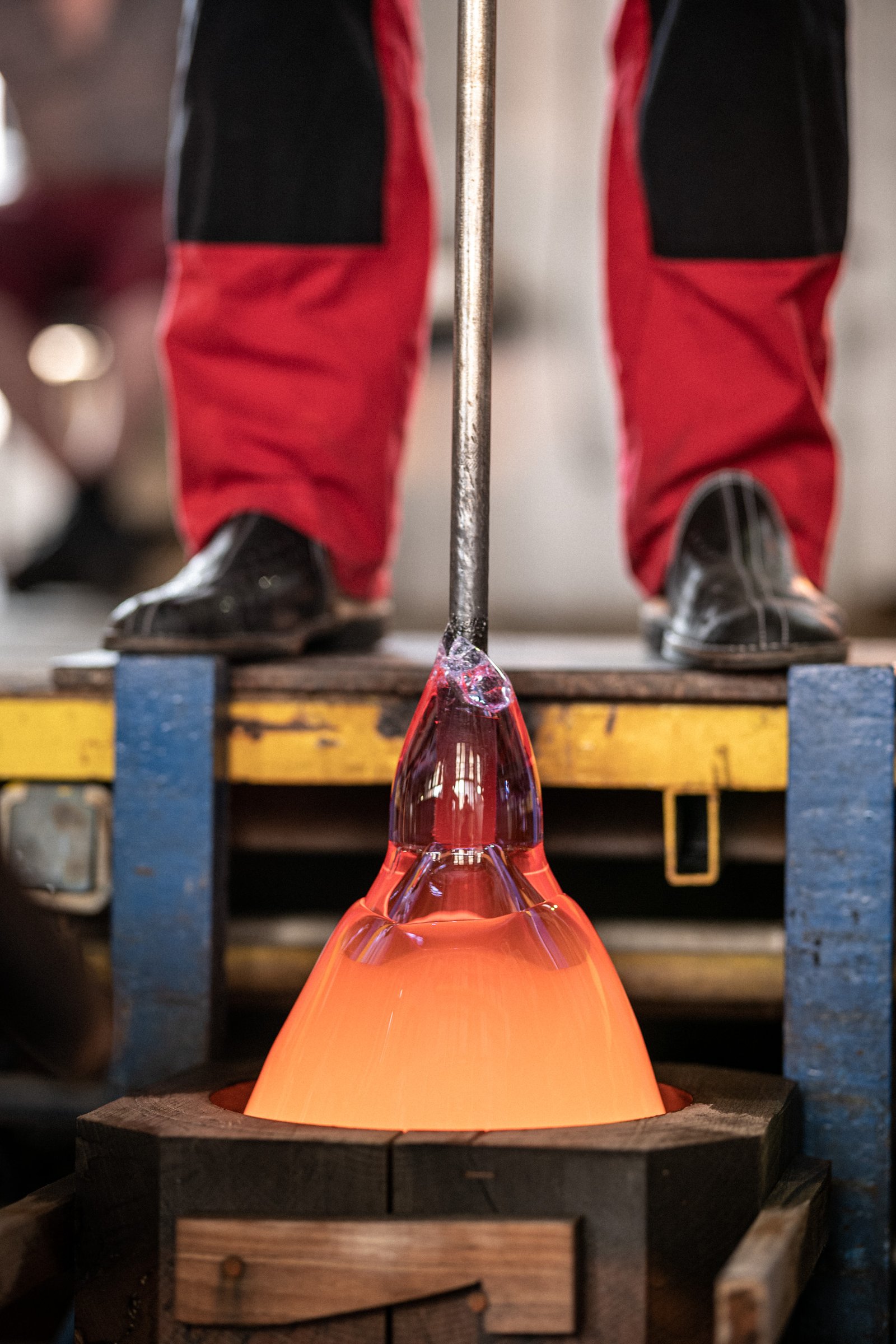
It wasn’t until the 1st century B.C. that glassblowing was invented in the Syro-Palestinian region. An invention that made it possible to produce vessels of all shapes much more quickly, while making glass more affordable (until then, it had been prohibitively expensive for most people).
An iconic technique that, even today, remains the starting point for every crystal piece produced around the world :
Third Era : The 15th and 16th centuries, when Venice and its "cristallo" changed the game
We’re not going to revisit the entire history of Murano in this article, since we’ve already published several dedicated guides covering its history, manufacturing process, and even its differences from crystal. But exploring the history of crystal without mentioning the famous Venetian “cristallo” would be a mistake.
If only to clear up a common misconception once and for all :
Cristallo, invented by Murano glassmaker Angelo Barovier in the 1450s, is a type of Murano glass produced through purification and decolorization techniques. Result ? Colorless, exceptionally clear glass, with transparency comparable to natural rock crystal. Hence its name, derived from “cristallo di rocca” (italian for rock crystal).
To help you compare, here is a piece of cristallo (man-made) alongside a piece of rock crystal (natural) :
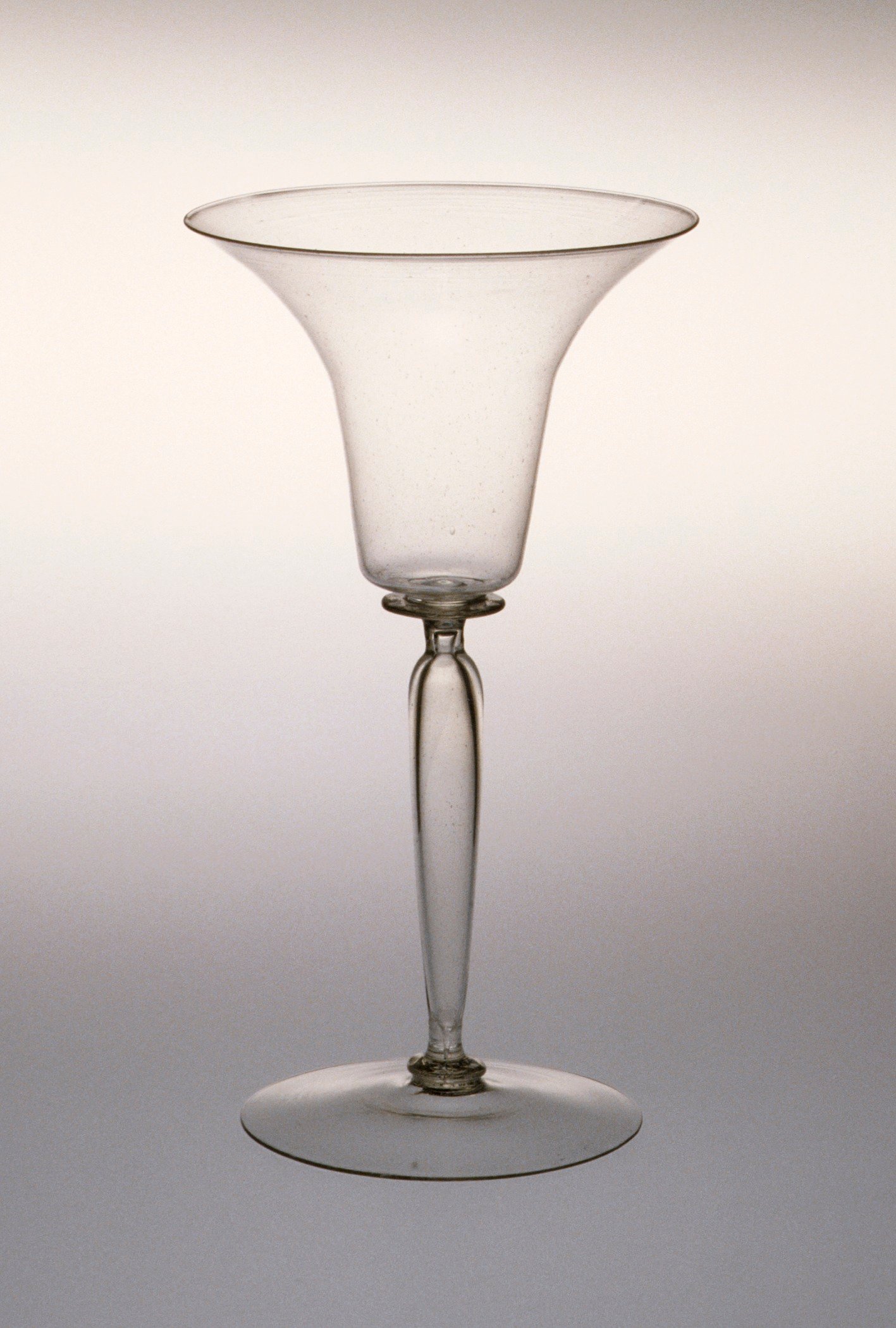
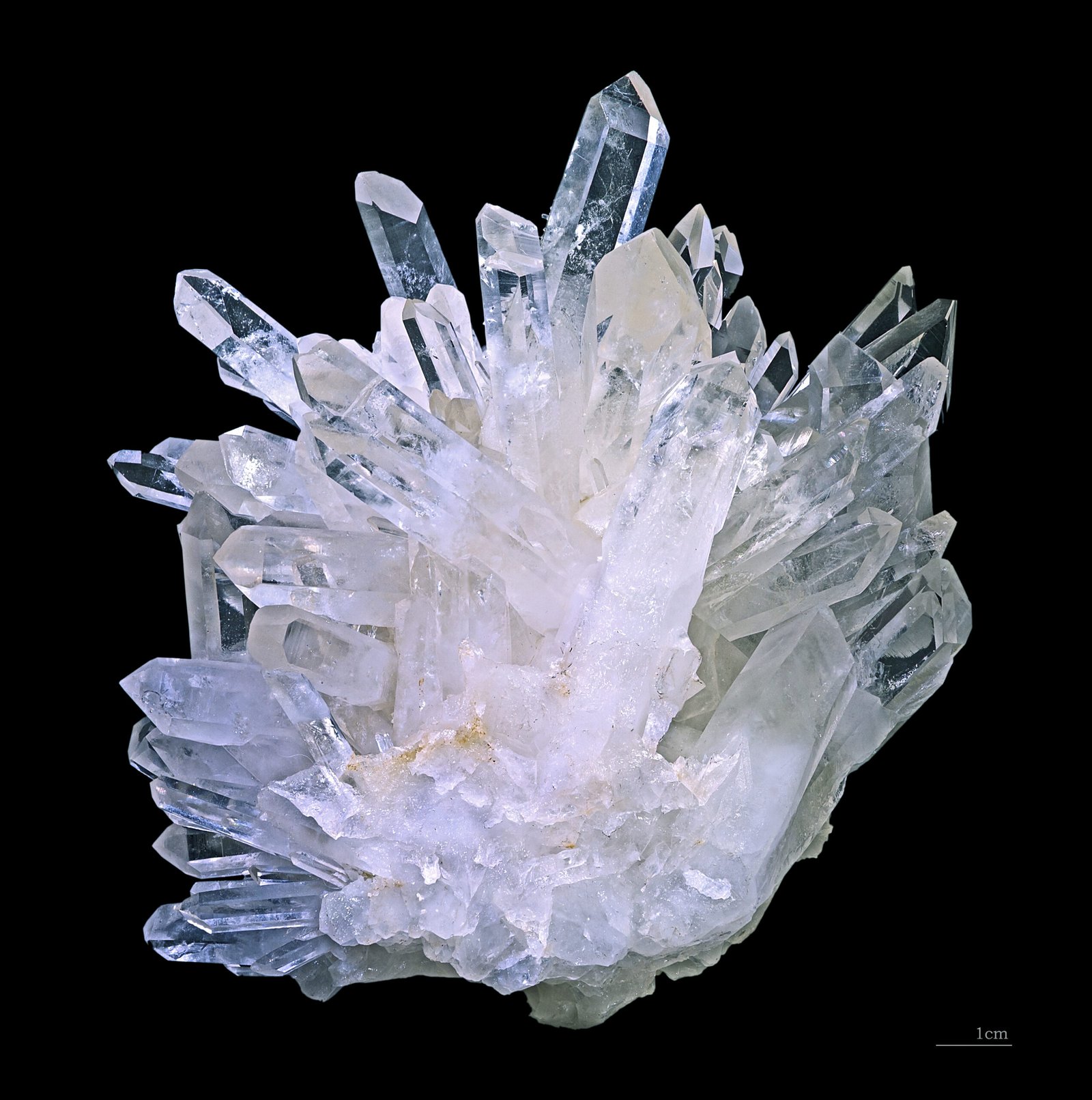
But despite its exceptional properties, cristallo remains, above all… glass (lead-free). It was therefore never intended to imitate lead crystal (which hadn’t even been invented yet). Instead, its purpose was to replicate the appearance of natural rock crystal.
It was therefore never intended to imitate lead crystal (which hadn’t even been invented yet). Instead, its purpose was to replicate the appearance of natural rock crystal.
And it was this remarkable achievement, combined with Venice’s growing influence at the time, that encouraged other glassmaking regions (particularly Bohemia, in what is now the Czech Republic) to find ways to compete with this material. To reduce their dependence on Venice and the Venetian-style imitations known as “façon de Venise”…
Fourth Era : The 17th century, the true invention of crystal as we know it today
1 : The invention of lead crystal in England
It’s safe to say that Venice’s supremacy in glassmaking endured for quite some time… After all, it took another 224 years before Englishman George Ravenscroft obtained a patent to develop a type of glass resembling natural rock crystal (and therefore, indirectly, an alternative to Venetian cristallo).
The problem ?
The pieces produced tended to develop a “cloudy appearance” after just a few months. A defect known in English as “crizzling.”
This defect is believed to have led to the addition of lead to the glass composition, resulting in the discovery of a heavier, more reflective, and more resonant material… flint glass (which would eventually evolve into the crystal we know today). A little historical detail worth noting: the earliest flint glass pieces contained only around 16% PbO, not 24%.
This discovery was officially announced in the London Gazette on June 3, 1676, which notably mentioned the distinctive ringing sound of the new glassware. This would make it the earliest documented reference to the famous “crystal-clear ring.”
Now, to put things into perspective, many details remain disputed :
For example, a report by Historic England suggests that George Ravenscroft may not have been the actual inventor, but rather a financial backer (=an investor). The invention itself may have been the work of an Italian glassmaker named Da Costa, while production was reportedly handled by English glassmaker Hawley Bishop. Ravenscroft may therefore have simply been fortunate enough to take the credit. Even the origin of the idea remains debated: was it an accidental discovery, or a technique learned in Venice? The question has never been definitively settled.
In short, the truth behind the invention of lead crystal (and the identity of its actual inventor) remains a subject of debate. And it will probably remain a mystery forever. Nevertheless, all sources agree on two points: the invention emerged in England during the 1670s, and it had a profound influence on the development of the crystal we know today.
2 : Competition from Bohemian crystal beginning in the early 1700s
Naturally, whenever someone introduces an innovation, their neighbors want to follow suit, fearing they’ll be left behind. And that’s exactly what Czech Republic (Bohemia) did.
Especially since, at the time, Bohemia primarily produced Lesní sklo (forest glass). Its name came from the greenish tint caused by iron oxide in the wood ash used during the melting process.
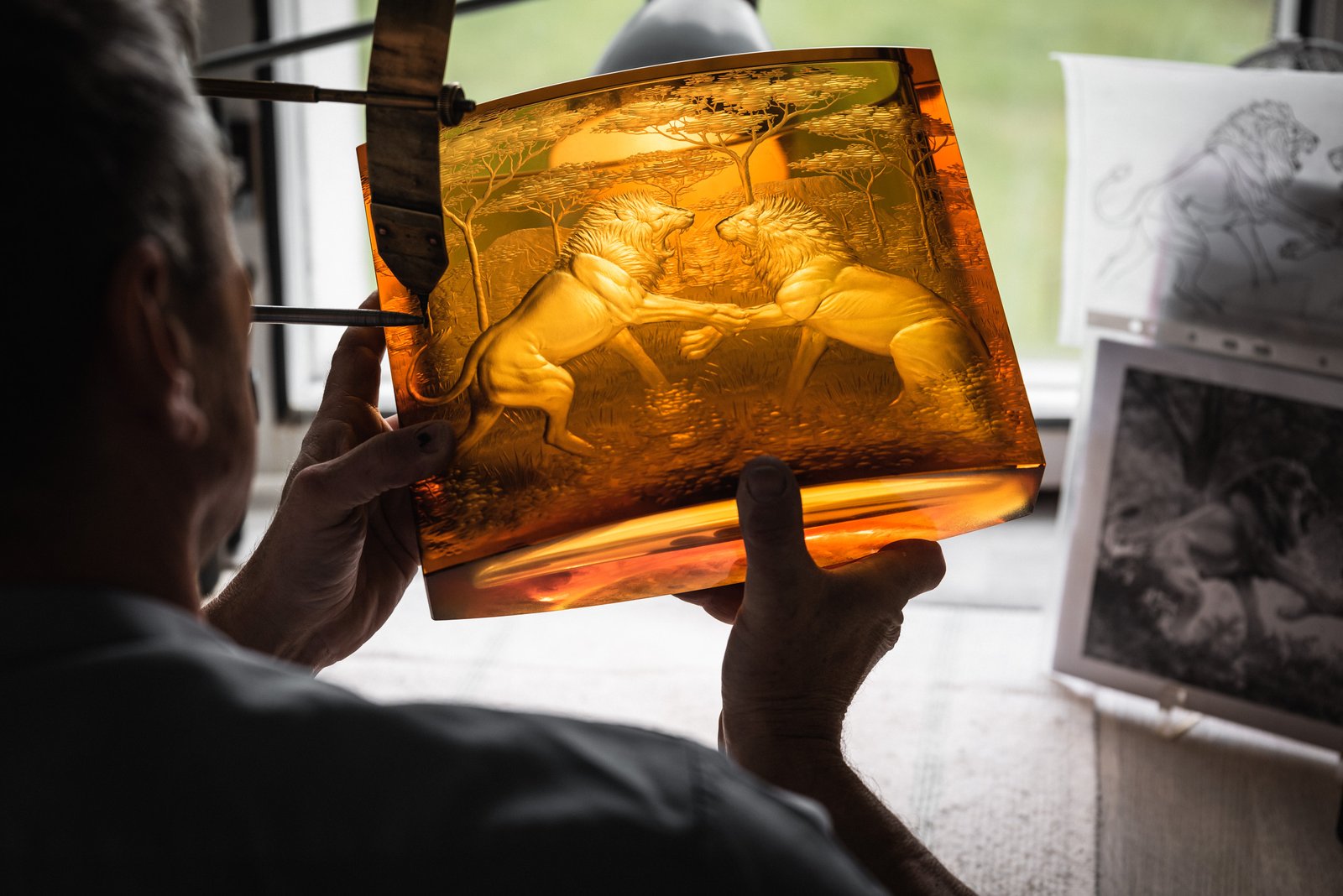
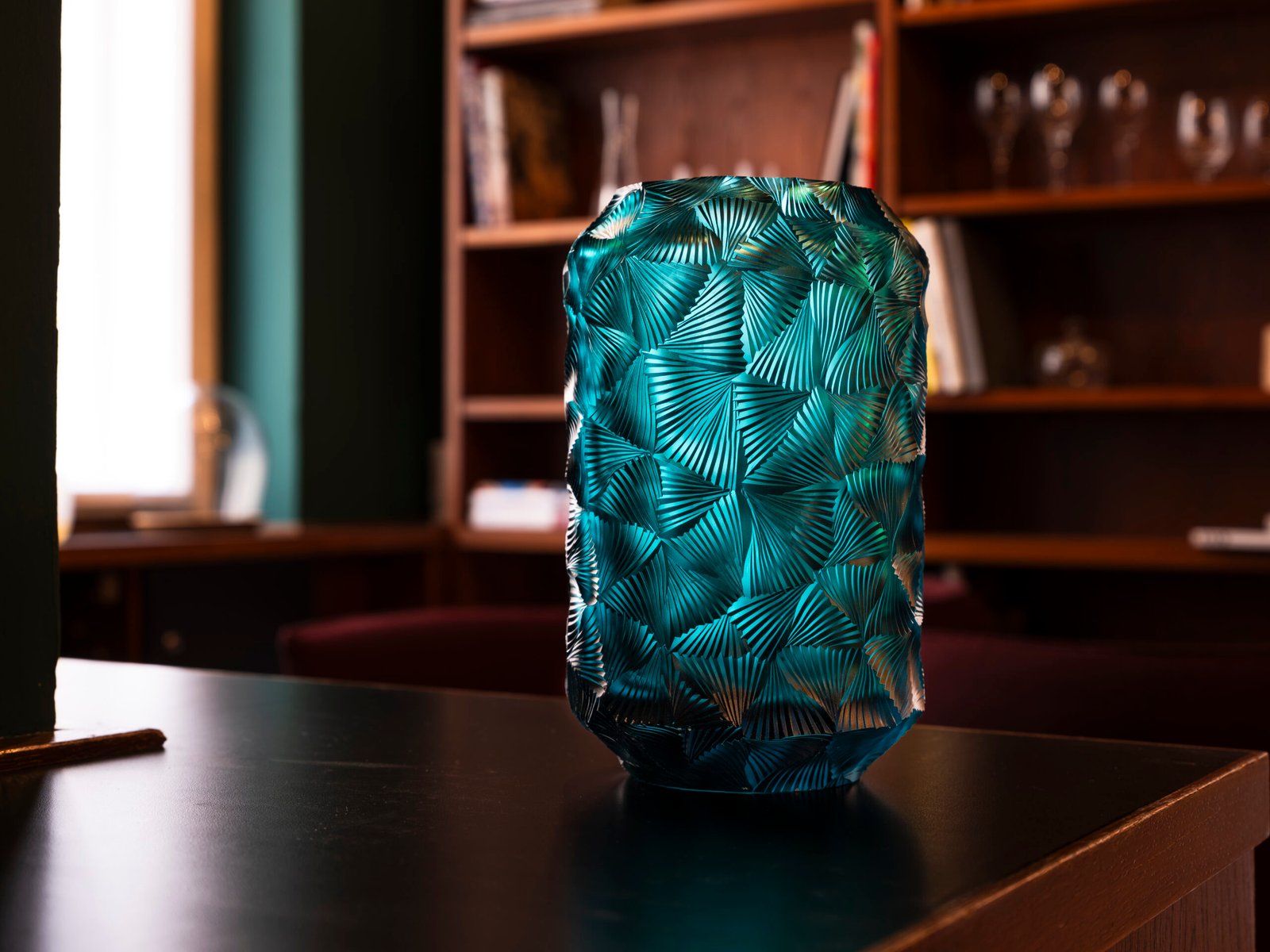
Around the late 1690s and early 1700s, a new (lead-free) formula based on potash and lime was developed. Result ? A substantial, exceptionally clear glass that made it possible to showcase another Bohemian innovation from the early 1600s: glass cutting and engraving. This marked the moment when Bohemia began to dominate the European glassmaking landscape, thanks to a specialty its artisans continue to master at an exceptional level to this day.
Don’t believe us ? Just take a look at these two pieces from our partner crystal houses, Moser and Ruckl :
Fifth era : From the 18th to the 20th century, the golden age of French crystal
1 : Saint-Louis, the birth of France's first crystal house
Although France is now among the world’s three leading crystal-producing countries, we were far from being the first… In fact, it took around 125 years for France’s first crystal house, Saint-Louis, to emerge.
125 years ?
Yes, because although Saint-Louis had existed since 1586 under the name “Münzthal Glassworks,” it wasn’t until 1825 that it devoted itself entirely to crystal production, following the discovery of its formula by Mr. de Beaufort in 1781.
2 : Followed by Baccarat, the future legend
Despite the creation of Saint-Louis, France remained heavily dependent on imports from Bohemia in the 1700s and 1800s.
This prompted the Bishop of Metz to request royal permission to establish a glassworks in 1764. A request granted by Louis XV, who sought to address the lack of fine glassmaking in France and prevent money from flowing out of the kingdom.
But just like Saint-Louis, Baccarat initially produced ordinary glass. It would take another 52 years before crystal production finally began in 1816. The rest is history…
3 : And Finally, the rise of French crystal on the international stage
Despite this “late start” compared to its European neighbors, the emergence of Saint-Louis and Baccarat officially set the French crystal industry in motion. And it didn’t take long for French crystal to conquer royal courts around the world.
This rise was supported by the emergence of other crystal houses over the years, including :
– The famous Cristallerie Royale de Champagne. Founded in 1666 by a Venetian master glassmaker, it wasn’t until the Marquot family took over in 1854 that the company turned to lead crystal. It eventually became one of France’s most important crystal manufacturers in the luxury industry (employing more than 600 people at its peak in the 70s).
– Then Daum, in the 1930s, before transitioning to pâte de cristal (crystal paste) in the 1960s.
– And, of course, the iconic Lalique, which shifted to crystal production after World War II, in 1945, under the leadership of Marc Lalique.
In short, these crystal houses quickly established France as one of the world’s leading centers of crystal production, greatly supported by our international reputation as the country of refinement, luxury, and art de vivre. A status France still holds today, as it remains, alongside the Czech Republic and Ireland (Waterford), one of the only countries still producing high-end crystal.
Sixth era : 1969, When the word "crystal" became a legally regulated designation in Europe
Much like Murano glass, crystal and the prestige associated with it have captivated wealthy buyers around the world. And naturally, such success attracts its fair share of imitations, counterfeits, and misleading claims about product authenticity.
That’s why, in 1969, a European directive was introduced to harmonize the laws of Member States concerning crystal. Its purpose ? To protect both crystal manufacturers and consumers.
Our dedicated articles on this subject :
– https://cristalartdeco.com/composition-du-cristal/
– https://cristalartdeco.com/difference-verre-cristal/
An important directive that has served as a legal reference for the past 57 years, but is now being challenged by new regulations aimed at reversing the use of lead…
Seventh era : Today, where the crystal industry navigates betwenn... new regulations, economic challenges and worldwide conflicts
Today, the crystal industry is facing major economic challenges, particularly rising energy costs and increasingly complex exports due to international conflicts.
And now, there’s a new challenge to add to the list : a return to the roots of crystalmaking, driven by French and European authorities seeking to completely ban the use of lead in crystal manufacturing. Result : crystal manufacturers are being forced to make enormous investments to comply with these new regulations. Meanwhile, energy costs continue to rise, since potential alternatives to lead all require higher melting temperatures = more energy consumption = higher production costs.
In short, after three centuries of marketing built around the unique properties of lead, crystal is once again moving away from it. A fundamental shift that challenges the standards established since Ravenscroft’s discovery.
But let’s end on a positive note :
Despite these new regulations, the crystal industry continues to thrive, supported by its enduring reputation as a symbol of luxury and refinement, as well as the exceptional craftsmanship of its artisans.
And this prosperity is particularly evident among our Czech neighbors, who stand to benefit greatly from the situation. As a reminder, Bohemian crystal was originally lead-free. And all the prestigious crystal Houses we work with have remained faithful to that original formula. Which means they have a head start of more than 125 years over our French crystal houses…
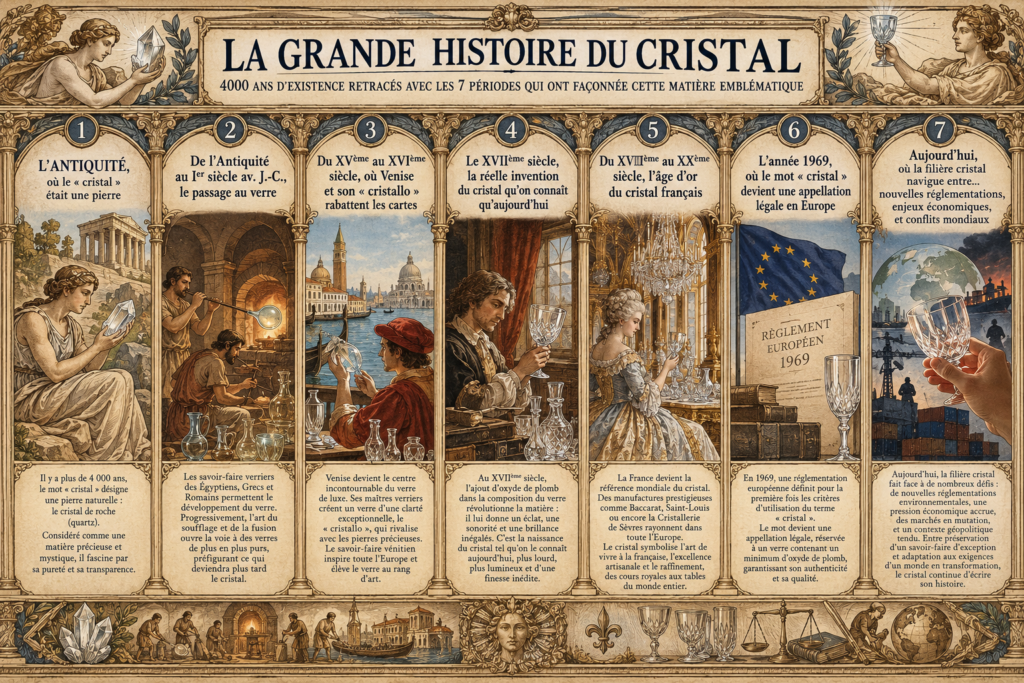
Recap : the history of crystal, illustrated in one timeline
Conclusion
The history of “crystal” isn’t the story of a single invention. It’s the story of a word that has described several different materials over time :
– First, a stone : natural rock crystal.
– Then, two competing formulas : English lead crystal vs Bohemian potash-lime crystal.
– Then, a legally regulated designation associated with lead.
– Before returning to lead-free crystal.
A distinction that may seem insignificant, but one that we believe is essential to understanding a common mistake (even made by professionals in the industry) : crediting the invention of “crystal” to one particular person.
Because there simply isn’t one correct answer.
It all depends on which crystal we’re talking about :
– Barovier, for the Murano glass known as “Venetian crystal” ?
– Ravenscroft (or Da Costa) for lead crystal ?
– Bohemian glassmakers for lead-free crystal ?
Each borned in a different country.
Each relied on the raw materials available to them.
Each was convinced they had created the finest material.
Yet they all shared the same original ambition : to rival the purity, beauty, and rarity of natural rock crystal. And that shared ambition reveals another common thread : regardless of the object, its name, its etymology, or the identity of its true inventor, “crystal” has always retained its status as a symbol of luxury, refinement, and prestige.
Looking to own a piece of luxury crystal (or simply browse our collection) ? Click here.
And if you’d like to explore the fascinating world of crystal even further, we recommend these four articles. They cover the history of Bohemian crystal, as well as places worth visiting across Europe to experience the heritage of this exceptional material firsthand :
https://cristalartdeco.com/tout-savoir-sur-le-cristal-de-boheme/
https://cristalartdeco.com/tourisme-cristal-de-boheme/
https://cristalartdeco.com/tourisme-cristal-france/
https://cristalartdeco.com/tourisme-cristal/

