Free shipping – Breakage protection included – No minimum order
Mouth-blown and handcrafted on the island of Murano, in the Venetian Lagoon, using techniques passed down from generation to generation since the 13th century… Murano glass holds a place among the world’s most noble and prestigious materials.
A reputation and prestige that have also made it a frequent target for counterfeiting. That’s why, as early as 1994, the Veneto Region introduced the Vetro Artistico® Murano certification to protect its name and authenticate genuine pieces.
Our curated selection consists exclusively of pieces certified under this prestigious designation.
Showing all 11 results
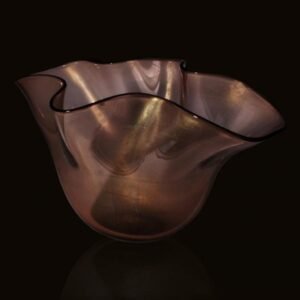
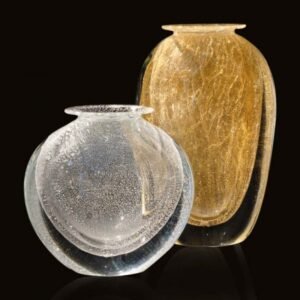
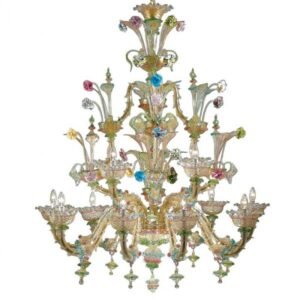
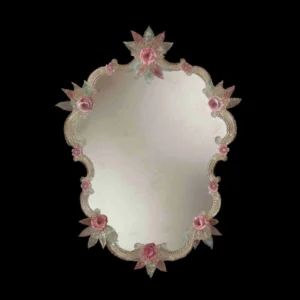
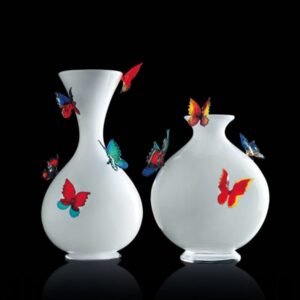
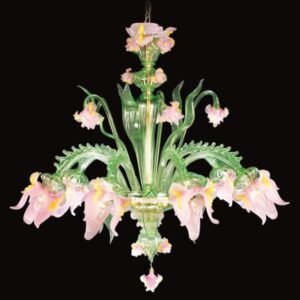
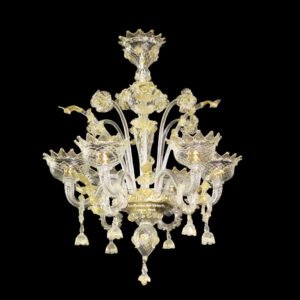

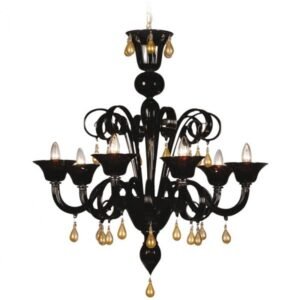
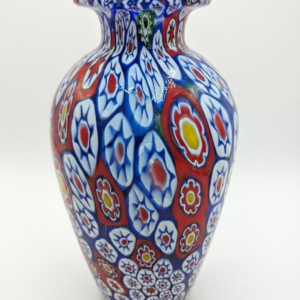
Admired around the world, imitated but never equaled, Murano glass is artistic glassware mouth-blown and handcrafted exclusively on the island of Murano, just across the lagoon from Venice.
Although most sources point to the 13th century, the earliest written reference to Venetian glass dates, in fact, to the year 982. That makes it the world’s oldest tradition of artistic glassmaking still practiced today.
And probably the most renowned, too.
Its reputation owes as much to its entirely handmade production as to its distinctive visual qualities (warm, vibrant colors, signature patterns such as “Millefiori,” and so on)… and to the legends surrounding it.
And here’s something worth knowing:
❌ The name “Murano glass” is not a brand.
✅ It is an indication of geographical origin.
That means only glass melted, blown, and shaped on the island of Murano can legitimately bear this name.
Any object sold as “Murano glass” without proof of its origin is a misleading marketing claim that can be challenged legally since the introduction of the Vetro Artistico® Murano certification, which we’ll explain in more detail below 👇
And if you’d like to learn more about Murano glass, its origins, its history, and its legendary maestros, read our complete guide to Murano glass.
Just as traditional glassmaking skills are recognized as intangible cultural heritage in France (and as UNESCO intangible cultural heritage), Murano’s craftsmanship is built around a handful of signature techniques, refined over the centuries and now protected by the Veneto Region’s certification.
There are so many that it’s hard to name them all, but here are a few worth knowing if you want to impress your friends over drinks:
– “Millefiori”: produced in Murano since the late 15th century, these are small glass canes made of different layers of colored glass which, once sliced, reveal recognizable star-shaped floral patterns. They’re widely used to create jewelry beads, as well as glass paperweights.
– “Sommerso”: also known as “vetro incamiciato” (cased glass), this technique involves layering glass (sometimes clear, sometimes colored) to create a sense of depth.
– Filigrana (a retortoli, a reticello): a decorative technique using glass canes containing threads of glass in different shapes and styles (“a retortoli,” “a reticello,” and “mezza filigrana”).
– “Lattimo”: invented in Murano in the mid-15th century, “lattimo” is an opaque white glass designed to imitate porcelain.
– “Avventurina”: a type of glass developed by Murano glassmakers in the mid-17th century. Its name comes from “adventure”, reflecting how delicate the process is and how uncertain the outcome can be, even for the most experienced glassmakers.
Want to explore further? Read our article on how Murano glass is made, where we explain 11 of the island’s signature techniques.
Its purpose is twofold:
1: To combat the flood of counterfeits and protect one of Italy’s most recognizable symbols around the world.
2: To guarantee (you, the consumer) the authenticity of the pieces you purchase.
In 1994, the Veneto Region created the Vetro Artistico® Murano certification, managed by Consorzio Promovetro Murano. This certification confirms that a piece was not only blown and shaped on the island of Murano in one of its certified glassworks, but also made using centuries-old traditional techniques.
⚠️ At present, only 35 glassworks are certified.
What does it take to qualify for certification?
1: Be located on the island of Murano.
2: Use techniques passed down from generation to generation.
3: Use specifically approved raw materials.
Strict standards that allow Murano glass to preserve its prestigious reputation through the centuries.
So how can you recognize a certified piece?
It’s very simple: each certified piece carries a tamper-resistant label associated with the identification number of the glassworks that produced it. You can then check that number against the official list of 35 certified glassworks. At the risk of repeating ourselves: this is the only official system that lets you distinguish genuine Murano glass from an imitation.
Planning a trip to Italy? There’s also an official list of stores in Venice and Murano that exclusively sell pieces carrying this certification.
And what about our selection?
💎 Every piece in our catalog comes from glassworks on the island of Murano that hold the Vetro Artistico® Murano certification. Without exception! And as far as we know, we’re the only website that applies such strict standards when selecting suppliers. Don’t believe us? Compare for yourself: every one of our product pages displays the certification number of the glassworks that made the piece. Other websites? Radio silence when it comes to provenance…
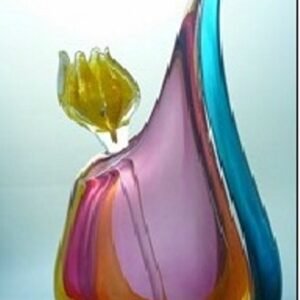
Murano glass vases bring together the island’s signature techniques (sommerso, murrine, filigree) in shapes ranging from delicate bud vases to grand statement pieces.
Unique creations to elevate your interior:
⇒ Explore our Murano glass vases.
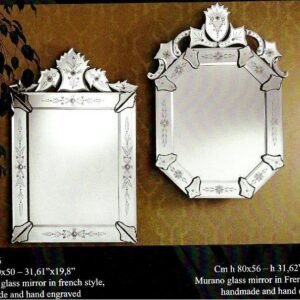
Venetian mirrors combine blown glass, hand engraving, and colorful decorative glass elements. This distinctly Venetian tradition dates back to the 16th century.
Today, only 2 families still carry on the artisanal production of mirrors AND hold the official certification: the Barbini and the Ongaro & Fuga families.
And we work with both:
⇒ Explore our Venetian mirrors.
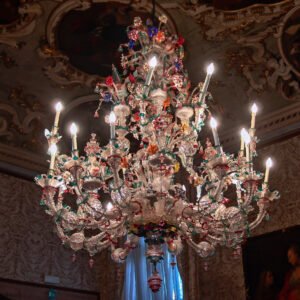
Recognizable by their ornaments of pendants, flowers, and leaves in colored glass, chandeliers are among the island’s most iconic creations, adorning luxury hotels, cathedrals, and private villas around the world.
⇒ Explore our Murano glass chandeliers.
Bracelets, necklaces, earrings: Murano glass jewelry draws on torchworking and the centuries-old art of Venetian glass beads.
⇒ Explore all our Murano glass jewelry.
Animals, abstract figures, signed sculptures… Murano glass has diversified over the years.
⇒ Explore all our Murano glass sculptures.
Have a piece right in front of you? Then inspect the key characteristics of Murano glass! An authentic piece will often display:
– Tiny imperfections that reveal the handmade process: small bubbles, slight asymmetry, and so on.
– Warm, deep colors: as if to evoke the vibrant warmth of the Italian people, Murano glass pieces often feature warm, bold, unapologetic colors. Counterfeits, by comparison, tend to have duller, less “lively” colors.
– A “pontil” mark underneath the piece: the scar left where a glassmaking rod was attached, another sign of handcrafted production.
In total, there are 6 telltale clues, which we explain in this article, that can help you identify genuine Murano glass.
But keep one thing in mind:
These clues are useful ONLY when you’re examining a piece in person, at a gallery or antique dealer’s (and with a little experience). Online? They’re of little use, since no photograph allows you to assess them reliably.
So what should you do?
Only one criterion holds up 👇
When purchasing remotely, the only reliable way to identify genuine Murano glass is the Vetro Artistico® Murano certification, together with the corresponding glassworks identification number.
Any serious retailer:
1: Displays this certification.
2: Provides the producing glassworks’ identification number on the product page.
3: Allows you to verify that number with Consorzio Promovetro Murano.
A website that:
❌ Doesn’t mention this certification?
❌ Can’t provide the identification number?
❌ And relies on nothing more than “Made in Italy” or “Made in Venice”?
Danger!
🛑 In 99% of cases, this isn’t Murano glass in the legal sense of the term. It may well be a very high-quality piece, worth purchasing in its own right, but don’t assume you’re buying authentic Murano glass without this certification.
Once again, we explain everything in our dedicated article, “How to Recognize Murano Glass.”
A difficult question with a difficult answer. Prices vary enormously depending on the type of piece, the glassworks that made it, whether precious materials such as 24-karat gold are used, and more.
But to give you an idea, here are some indicative price ranges for genuine Murano glass (meaning certified pieces!):
⇒ Murano glass bead jewelry: from $40 to $80 for smaller pieces, and up to more than $400–$500 for larger creations (necklaces, pendants).
⇒ Small sculpture or collectible animal figurine: at least $100–$200 for the simplest pieces, up to more than $2,000 for creations from a renowned glassworks.
⇒ Vase: expect to pay at least $300–$400.
⇒ Murano glass chandelier: starting at $1,000–$1,200 for smaller chandeliers and reaching more than $20,000 for larger ones.
Why is it so expensive?
❌ Because a Murano glass creation isn’t just “an object.”
✅ It’s the result of entirely handmade craftsmanship (several hours to several days of work per piece), precious raw materials, more than 20 years of training for master glassmakers, and the assurance of owning a piece unlike any other in the world.
In short, you’re buying more than craftsmanship… you’re acquiring an entire thousand-year-old heritage.
So:
You can be sure that an object sold as “Murano glass” for $15 or $20… isn’t the real thing. The production costs alone make that impossible.
Murano glass stands out for 3 reasons: it is hand-blown on the island of Murano following a thousand-year-old tradition, it contains no lead (unlike crystal), and its authenticity is certified by an official designation: Vetro Artistico® Murano.
Exclusively on the island of Murano, as its name suggests. Located in the Venetian Lagoon, its glassworks have been concentrated there since 1291, when the Republic of Venice banned glassmaking on the mainland. Glass blown outside the island of Murano cannot bear this name.
The only RELIABLE criterion is the presence of the Vetro Artistico® Murano certification. With the corresponding glassworks identification number, you can verify its origin through Consorzio Promovetro Murano.
There’s only one way: the Vetro Artistico® Murano certification, created by the Veneto Region to certify the authenticity of Murano glass pieces. If your piece doesn’t carry the official certification label, it’s a fake.
Because it reflects entirely handmade craftsmanship that can take days or even weeks, and because each piece is unique in the world. Genuine Murano glass is the result of a thousand-year-old tradition, a heritage passed down from generation to generation and kept alive today by just 35 families on the island.
Prices range from $50–$100 for a small piece of jewelry to more than $20,000 for chandeliers, mirrors, and similar creations. A vase or sculpture? Anywhere from $300–$400 to more than $2,000.
Use lukewarm water at 30–35°C with a few drops of soft soap and a gentle sponge (or a microfiber cloth). ABSOLUTELY avoid chemical detergents, dishwashers (for tableware), hot water, and abrasive sponges. For the complete instructions, see our dedicated care guide.