Free shipping – Breakage protection included – No minimum order
Looking for crystal glasses to set an exceptional table, celebrate a special occasion with a memorable gift, elevate your tasting experiences… or simply treat yourself to pieces you can pass down as family heirlooms ?
You’re in the right place. For over 20 years, we’ve been offering a curated selection of the finest handcrafted pieces, hand-blown and hand-cut.
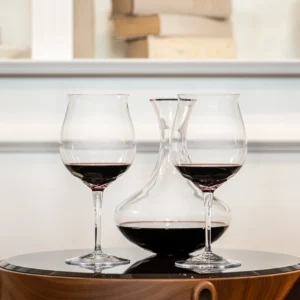
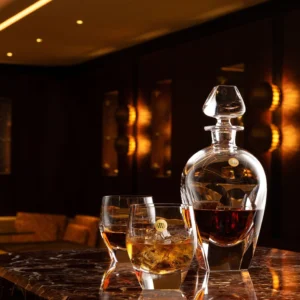
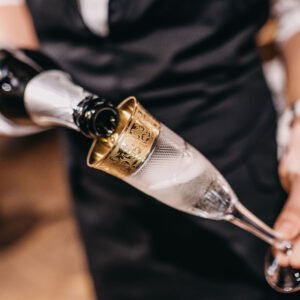
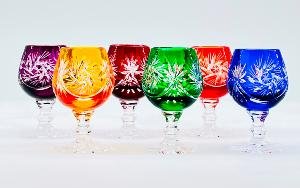
To narrow down your search, explore our crystal wine glasses, our crystal whiskey glasses, our crystal champagne flutes, glasses & coupes, and our bohemian crystal glasses.
And to complete your set, explore our curated selection of crystal decanters.
Showing all 6 results
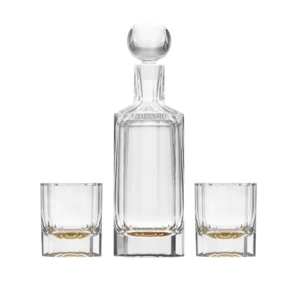

Everyone knows that the main difference between ordinary glass and crystal is the presence of lead: at least 24% in crystal, according to European regulations.
But that scientific distinction is merely a regulatory one.
If crystal has stood the test of time and remains admired around the world today, it is for 5 very specific reasons:
For the aromas: whether you’re enjoying wine, champagne, whiskey, or even cognac… the delicacy of the rim and the purity of crystal preserve the taste, unlike a thick glass. Crystal glasses therefore bring a genuine advantage to your tasting experience.
For the sight, sound & touch: crystal’s absolute clarity, sparkle, and brilliance in the light… enhance the color of wine, the golden hue of champagne, or the amber tones of your whiskey. The clear, ringing sound (also known as the “song of crystal”) of glasses touching in a toast is, in itself, closely tied to the pleasure of sharing a moment. And finally, crystal, on average 30% heavier than ordinary glass, offers a feeling of “substantial elegance” in the hand that completes the sensory experience.
For tradition & craftsmanship: crystal embodies the French art of living, passed down for centuries and admired throughout the world. But above all, it is a material that carries centuries of artisanal expertise, since an authentic crystal glass is handcrafted by at least ten artisans. Quite unlike an ordinary glass, fresh from a factory and shaped by soulless machines.
For longevity & heritage: if you take proper care of your crystal glassware set, it can be passed down through several generations without a problem. Unlike an ordinary glass, a crystal glass is an heirloom, not just something to drink from.
For prestige: chosen by royal courts, embassies, and the finest Michelin-starred tables for nearly 300 years. A choice synonymous with power, in short.
Crystal glasses:
❌ Aren’t just for drinking.
✅ They celebrate a moment. They mark a special occasion.
But to truly appreciate what makes drinking from crystal glasses so special, read our article on how they are made.
Although crystal continues to reinvent itself over time, certain crystal makers and glassware collections have left a greater mark on history than others. Whether through their design, their beauty, or the people who owned them:
The oldest crystal manufacturer in France, Saint-Louis is one of the country’s three leading luxury crystal houses.
And its Tommy collection, iconic since 1928, is proof of that:
⇒ A star-cut foot.
⇒ And a bowl decorated with diamond cuts, bevels, fine lines, and beads.
A timeless collection, a bestseller for the crystal house, that has even found its way into one of France’s most prestigious settings: the Hall of Mirrors at Versailles.
Another renowned French manufacturer, Baccarat has stood the test of time with its Harcourt collection, created in 1841:
⇒ A hexagonal foot.
⇒ A stem with three decorative knobs.
⇒ 6 facets.
⇒ And a substantial weight, reaching up to 530 g for its wine glasses.
The glasses in this collection have become true icons of crystal craftsmanship, sought after by collectors.
Speaking of Baccarat, we could also mention the glasses from its Masséna collection, created in 1980 and recognizable by their deep, organ-pipe-style bevel cuts that radiate from the foot to the base of the bowl.
A collection created in collaboration with wine critic James Suckling:
⇒ A nod to the 100-point wine rating system.
⇒ A slender silhouette.
⇒ And a tall, subtly cut stem in satin-finished and repolished crystal.
A collection that quickly won admirers, establishing itself as a benchmark for contemporary wine glassware.
The region of Bohemia, in the Czech Republic, has produced crystal since the 14th century. Its signature? Particularly deep & geometric cuts, and crystal of unrivaled clarity.
And when it comes to this tradition, Moser stands out. The most renowned crystal house in Bohemia since 1857:
⇒ Official supplier to numerous imperial courts, Gulf royal families, and, more broadly, religious, diplomatic & aristocratic circles.
⇒ Iconic collections such as Splendid, Lady Hamilton, Royal, Pope.
⇒ Renowned for its lead-free crystal, colored glasses, and magnificent cuts & engravings, all executed entirely by hand.
To discover the full extent of Czech craftsmanship, take a look at our Bohemian crystal glasses.
The French tradition of fine tableware distinguishes each glass according to the drink it holds, because the shape of the rim, the length of the stem, and the diameter of the bowl are all designed to bring out the aromas of a specific beverage.
Serving a Bordeaux in a champagne glass or whiskey in a water glass means missing out on half the experience.
To help you, here’s a quick guide to choosing the right crystal glass:
Wine glasses: The broadest category, and for good reason: a crystal wine glass enhances aromas differently depending on its shape and height. For red wine, choose a glass with a wide bowl and a narrower opening to release complex aromas through aeration while directing them toward your nose. For white wine, opt for a taller, narrower glass that preserves freshness and limits oxidation while concentrating more delicate aromas. In any case, the universal rule is to always hold your glass by the stem or foot so the warmth of your hand doesn’t heat the wine. For a dedicated selection, our crystal wine glasses page has exactly what you need.
Crystal whiskey glasses: These fall into 3 main families: the tumbler/old-fashioned glass, with its thick base and wide opening. Ideal for whiskey on the rocks or cocktails. Then there’s the Glencairn tasting glass, with its narrower bowl to concentrate aromas. This one is designed for tasting whiskey neat. And finally, the tulip glass, with its rounded bowl and narrow opening. Also ideal for tastings and single malts.
Champagne flutes: With their tall, narrow shape that preserves effervescence and concentrates the bubbles, flutes remain the preferred choice today. The champagne coupe is still an option, but a less common one because its shallow bowl and wide opening are less effective at preserving the fizz. And for those who take tasting seriously, the tulip glass is now the style recommended by wine experts. But for the full story, visit our dedicated page on crystal champagne flutes, glasses & coupes.
Liqueur & after-dinner drink glasses: The smallest glasses on the list (3 to 7 cl on average) and often beautifully hand-cut. These glasses are designed specifically for spirits served after a meal: eau-de-vie, marc, and liqueurs. Cut crystal truly comes into its own here because even a small amount of liquid brings out its play of light. And to make that effect even more striking, we highly recommend the Solaris spirits glass, featuring a 24-karat gold mirror at the bottom.
Cognac glasses: Recognizable by their rounded (balloon-shaped) bowl and narrow rim, which concentrate aromatic vapors. Unlike wine glasses, they’re designed to be cradled in the palm of your hand: its warmth gently heats the cognac and releases its aromas. For a timeless piece that respects tradition, take a look at our Maharani 2023 Edition cognac glass. For a touch of luxury, explore our Splendid cognac glass, or Copenhagen. And for a piece with a powerful meaning, take a look at our Pope cognac glass, or the Mozart cognac glass.
Water glasses: Unlike liqueur glasses, these are often the largest. Available as tumblers or generously sized stemmed glasses.
Setting a table is part of the French art of living (and entertaining). A subtle art that’s difficult to master and would take far too long to explain here.
But if you’d like to set your table “the old-fashioned way”, here’s one simple rule to remember when arranging the glasses:
Always arrange them from left to right, from largest to smallest. The water glass therefore always sits on the far left.
The market for antique crystal glasses is one of the most active segments of secondhand fine tableware.
And for good reason:
It’s the only way to find discontinued collections, sometimes even iconic ones, that are no longer available in stores: a Baccarat set from the 1950s, an original Saint-Louis Tommy set, or a Moser Maria Theresa. Collections from the 19th century (1850–1900) and the Art Deco period (1920–1940) are particularly sought after and can sometimes command five-figure prices.
As for authentication:
Calling on an expert is almost essential if you want to authenticate your pieces with confidence. Maker’s marks have changed so much over time: before 1936, a Baccarat signature was a paper label (often long since lost), Saint-Louis pieces bore the wording “St-Louis Munzthal” before 1918, and as for Daum… don’t even get us started. So, if you’re planning to buy antique crystal glasses, contact us first. Or take a look at our Baroque collection, inspired by the 18th-century period of the same name.
One last point: proper care is even more important:
Crystal can become more fragile with age. So be sure to follow the advice we share just below to preserve your pieces for as long as possible. And keep in mind that a crystal glass with a history may show tiny scratches on its foot (from contact with the table), a slight cloudy film on the bowl (from mineral deposits), or sometimes a barely noticeable chip on the rim. These aren’t flaws, but signs of normal wear over time that make your piece even more unique.
A well-maintained crystal glass can (and should!) easily be passed down through 2 or 3 generations.
Preserving this legacy isn’t particularly complicated. It simply takes a few rules that must be followed to maintain the brilliance of your pieces:
Rule No. 1: Hand-Washing ONLY
The dishwasher is crystal’s worst enemy: thermal shock, harsh chemicals, and mechanical friction. You can be sure of damaging your crystal glasses in a single cycle.
Rule No. 2: No Hot Water or Harsh Chemicals
A sudden change in temperature can cause a crystal glass to crack. Harsh detergents, meanwhile, tend to be too acidic and can “attack” the crystal. So always wash it with a mixture of lukewarm water (30–35°C) and a little soft black soap.
Rule No. 3: Always Use a Soft Sponge
Forget the rough green scouring side of your sponge, even if your glass is particularly dirty. It’s too abrasive for crystal and will leave fine scratches on the surface. Always use a soft sponge.
Rule No. 4: Wash & Dry Immediately
Always wash your glasses straight after use to prevent buildup. And dry them immediately with a soft, lint-free cloth (microfiber or linen) to avoid mineral spots left behind by water.
Rule No. 5: Storage
Always store crystal glasses upright (with their feet resting on the shelf) to avoid putting pressure on the rim, the most fragile part. And avoid direct contact between glasses: if you’re short on space, slip a sheet of tissue paper between them.
For more details (frequency, tips & tricks, etc.), read our complete guide to caring for crystal.
The price of a crystal glass varies considerably depending on the crystal manufacturer, the type of glass, the complexity of its cuts, and its decoration (platinum, 24-karat gold, etc.).
But to give you an idea:
– Expect to pay between €75 and €100 for ONE smooth crystal glass (without cuts or decoration) from a renowned crystal house.
– For a cut crystal glass and/or one featuring 24-karat gold decoration (from a renowned crystal house), expect to pay around €200 to €600 PER glass.
– And for exceptional or limited-edition pieces, there’s no real ceiling. Prices can reach over €3,000 PER glass.
5 tests to know: look for an engraved maker’s mark under the foot, gently tap the glass (crystal produces a high, lingering ring), weigh it (crystal is significantly heavier than an ordinary glass of the same size), hold it under a bright light (crystal produces beautiful rainbow reflections), and feel it (crystal’s unmatched precision of cutting creates crisp edges that can feel almost sharp).
7 good reasons to drink from crystal glasses: first, the enhanced aromas thanks to the delicacy of the rim. Second, the perfect clarity that shows off your drink. Third, the crystal’s distinctive ring that marks the moment. Fourth, its substantial, luxurious feel in the hand. Fifth, the tradition and craftsmanship behind it. Sixth, its durability (a well-cared-for crystal glassware set can be passed down for generations). And seventh, the prestige and symbol of power it represents.
Absolutely! Under normal use, the presence of lead in crystal (regulated by European authorities) poses NO health risk. Just avoid storing strong spirits in your decanter for more than a week.
In France, Baccarat, Saint-Louis, Lalique, and Daum are the historic benchmarks, all recognized with the Entreprise du Patrimoine Vivant (Living Heritage Company) label. Internationally, Moser has established itself as a leading name in luxury Bohemian crystal.